
Percolating
A slow and steady approach to changing difficult ADHD behaviors


Recently I read “A Different Way to Learn: Neurodiversity and Self-Directed Education” by Naomi Fisher. There was a lot of helpful stuff in there for supporting kids who don’t do well in ‘typical’ school environments. The focus is on schooling, but it’s also just about how some kids learn differently than the majority of kids. But some of the passages that describe a process of ‘drip and percolate’ have been really helpful at understanding - and more effectively responding to - the behavior of my 10yo.
On pages 168-169 of the book (and I do highly recommend the entire book!) Fisher writes:
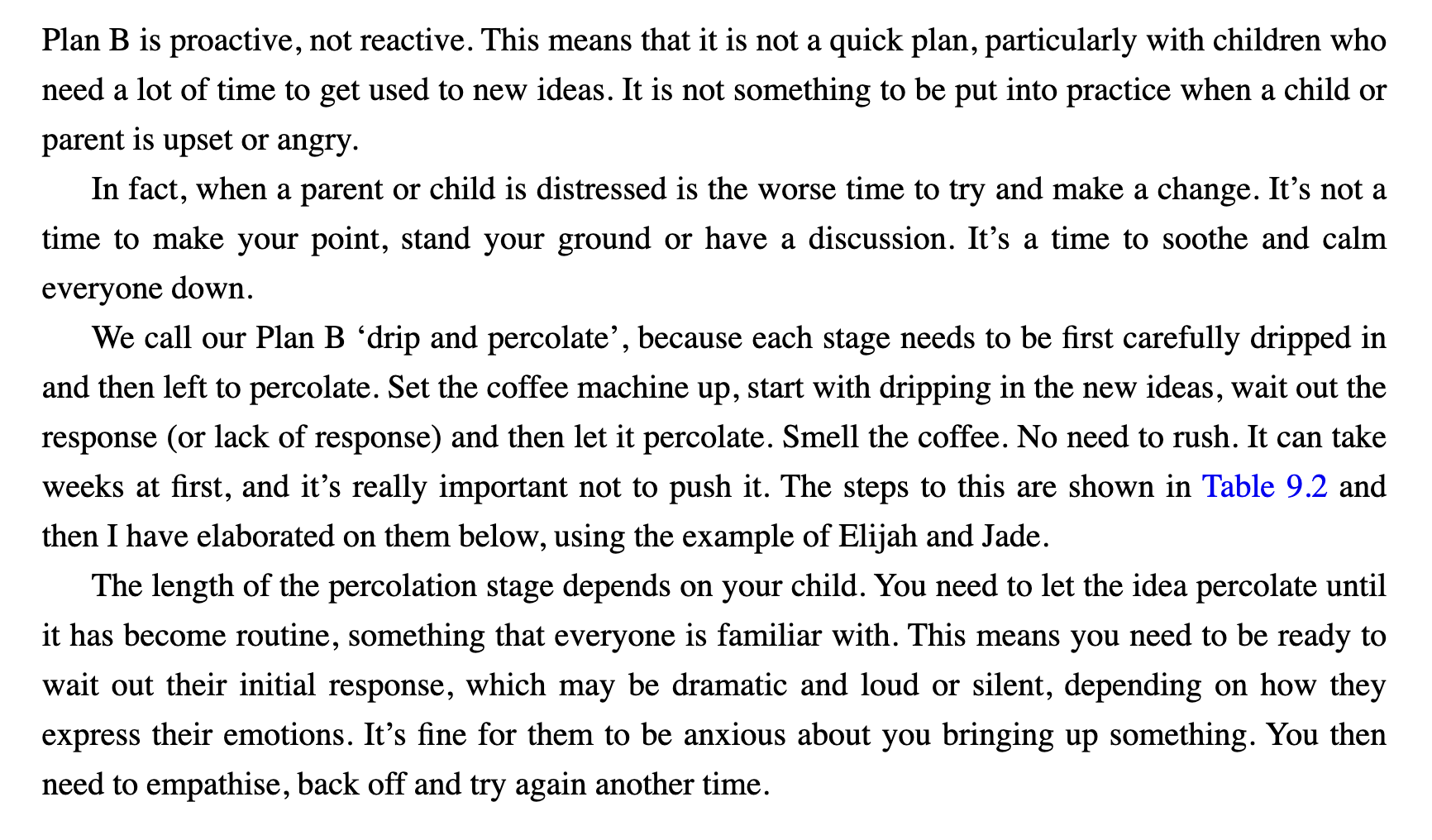
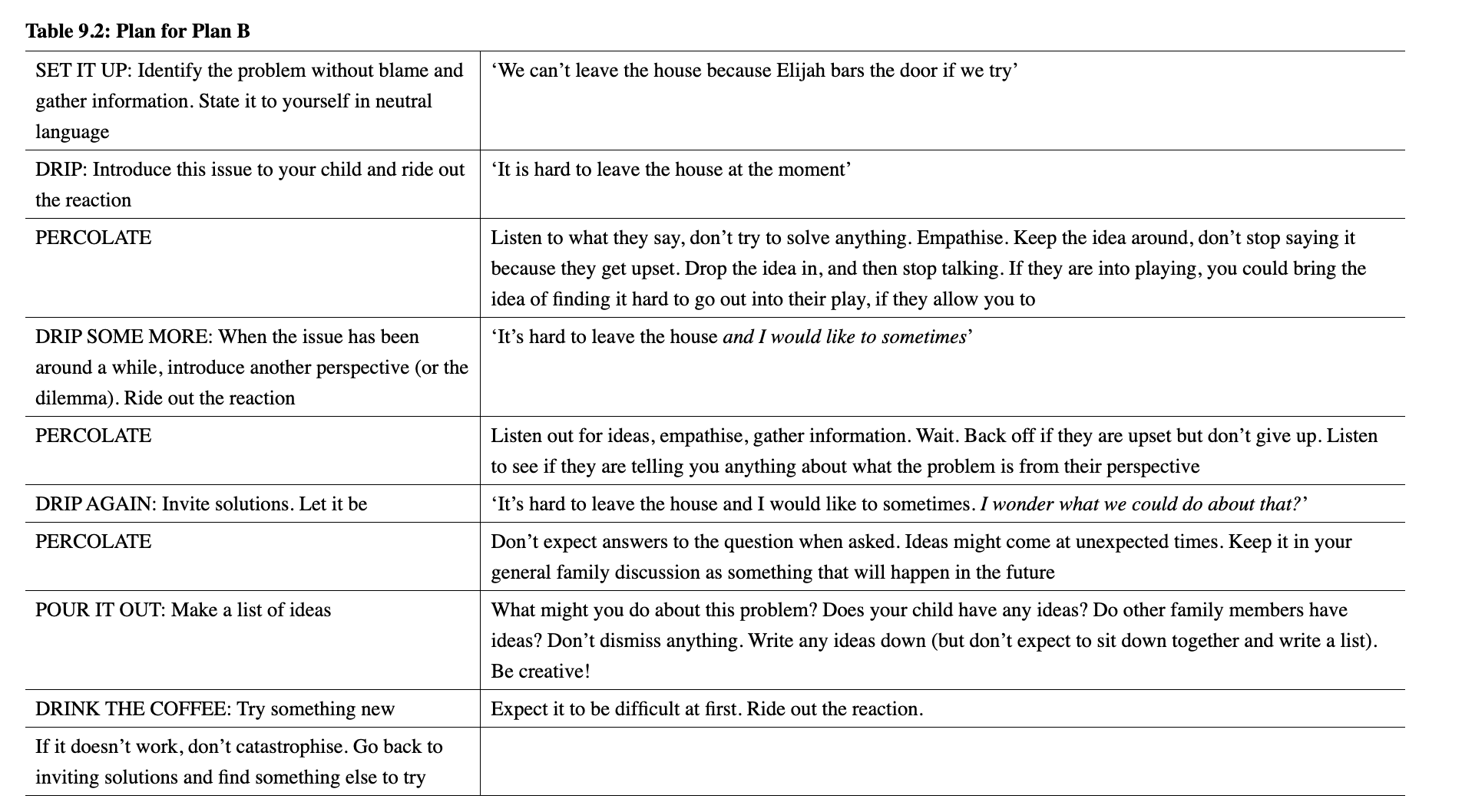
Fisher then concludes (emphasis mine): “The basic idea behind the percolation stages is that children need time to get used to each new idea, and that you don’t have to keep talking to enable them to do this. In fact, lots of children find lots of talking by their parents very stressful.”
When all the right parenting methods fail spectacularly
My 10yo is extremely strong-willed and defiant and always has been. We aimed for an authoritative parenting approach - not authoritarian, but rather warm and loving but with strict rules and consequences - and this resulted in daily, intense power struggles.
We were following the basic protocol of “parents are in charge and if you enforce rules consistently, kids will eventually learn.”
Our family rules have always been pretty simple:
No violence
Speak kindly and respectfully to others
Clean up after yourself
Break a family rule, lose a privilege.
This kid, on a daily basis, would almost always find a way to break one of these rules. She would throw something at us when frustrated (breaking the ‘no violence’ rule). She would speak rudely or yell or scream at us. She would refuse to participate it ‘cleanup time’.
She would be carried off to time out, and lose a privilege every time. We did have a carrot and stick approach - she could earn stickers (or other rewards) for good behavior. Stickers were sometimes earned, but overall it never really improved her behavior. She simply did not care about punishments - or even rewards.
We held onto this strategy for literally YEARS, assuming that if we just stayed consistent, eventually she would learn. We assumed if she learned she didn’t ‘get’ anything from misbehavior, she would stop.
She did not stop.
She seemed to be unable to resist a power struggle. Basically if we told her to do something, it was like every day she wanted to find out what would happen if she said “no.” Even though she said was defiant the day before and figured out exactly what she would get: nothing, plus a punishment.
This was… baffling. All the parenting expertise said: kids push back on boundaries, it’s your job as parents to keep those boundaries, and after they’ve tested those boundaries and found them to be unyielding, they’ll obey the rules.
Well, she tested the boundaries, found them unyielding, and decided to keep testing them every single day for years.
In retrospect, and understanding her more now, I can see that the moments she was being defiant, she was in fight or flight and her ‘thinking brain’ was offline- but I didn’t understand that at all for many years. She has always been so incredibly smart, her language skills were super high - why was it like she wasn’t capable of understanding that you need to obey our incredibly simple list of rules?! What is so hard about this?!
Along the way all the advice we heard centered on this: your kid must just be a spoiled brat. We were told we need to lay down the law with this kid. Be stricter. Be firmer. We were firm! We never gave into a tantrum! We tried all kinds of therapies (occupational therapy, talk therapy, etc.). Nothing seemed to change her behavior.
In addition to punishments and consequences, her dad insisted on long talks (lectures, really) after major meltdowns to try and understand why she behaved this way and make sure she knew not to do it again. She absolutely hated them and it would often prolong - or revive - meltdowns that essentially ended up lasting all day.
So Fisher’s point - that parents talking and talking and talking can be stressful for kids - is absolutely true in my experience.
Our marriage did not survive this; not because of our child’s behavior, but because her dad blamed me for it. He basically threw his hands up and was like, whatever, you figure it out. And interestingly, her behavior did start to improve. Part of this was that she just started reaching an age of maturity where she could be somewhat more self-aware, and could begin interrupting the ‘meltdown’ process so her thinking brain could stay more online.
But I do think part of it was a more consistent application of a method of allowing her to ‘percolate’ on better coping strategies to prevent bad behavior during meltdowns.
Percolating “take a break when you’re upset”
So the main point here is that some kids take a while to get used to an idea or learn a new skill. That some kids simply are incapable of responding to a command to do something - or not do something - instantaneously.
My primary goal was to get my daughter to voluntarily remove herself physically from situations where she was frustrated, overwhelmed, or angry so she could take some time to calm herself down instead of either yelling at someone or throwing things or whatever. At this point, she was getting too big to be carried off physically to her room for a ‘time-out’. She was going to have to learn to remove herself from overwhelming situations on her own.
I started with this goal a year ago (before I read the book actually, but reading the book and this description of percolation made me understand why the strategy I took has been effective). At this point, she’s about 90% there. But it took a lot of work and percolation to get to this point.
At first, she would follow me around the house while I ignored her as she yelled or sometimes tried to hit me. I would just flatly repeat “please go to your room if you are upset, we’ll talk again when you’re calm” without making eye contact or reacting to her in any other way. She also experimented with threatening to run away, and a handful of times she followed through and actually left the house. But when she learned that strategy didn’t get a rise out of me at all (I just calmly followed her down the street w/my toddler along for the ride), she dropped it.
When she was calm or in a good mood, I would randomly bring it up. “Hey, the last time you got angry because you couldn’t find your skirt and you threw a hanger at me? Next time something like that happens and you’re mad at me, go take a break in your room. You can write in your journal about how angry you are. You cannot throw things. I am happy to help you look for something but you have to speak respectfully to me.” The end, that’s all.
Then some time passes. Then I bring it up again randomly, again at a calm moment: “Remember what you need to do when you’re frustrated or angry? Go in your room to calm down.”
Her meltdowns have dropped from 2 hours to 1 hour to 30 minutes to now about 15 minutes at the longest. Now (slightly disconcertingly, honestly) instead of yelling or throwing something, she’ll sometimes just calmly say, “you’re stupid” to me and sometimes say cruel things like “you’re a terrible parent” etc. when upset. It’s actually slightly more disturbing because her tone of voice sounds calm, but I know she’s incredibly upset and just learning to control how she shows that outwardly. We’re almost to the point where she can consistently remove herself from a frustrating or emotionally charged situation to calm down without flipping out on anyone.
I’ve learned this reaction of insulting me is ‘equalizing’ behavior often seen in PDA (“pathological demand avoidance” or “persistent drive for autonomy”) kids. She doesn’t want to feel ‘less than’ or acknowledge that I have any kind of power over her, so she insults me when I enforce a rule or boundary that she feels threatens her autonomy. And when I say ‘threatens’ I mean literally that - for whatever reason, she interprets certain demands as a threat to her survival, sending her into fight or flight. This is what I never understood about her meltdowns: she knew what the rules were, she knew what would happen if she broke them, so why wasn’t she following them?!
Well, now I know: because her brain told her that this rule or command was unsafe. Why? I have no idea. As a rule follower myself (people pleaser, really), it makes no sense to me. I never want to break a rule. I literally cannot wrap my brain around this idea that a rule or command could somehow feel threatening to someone’s very survival. But accepting this - as bizarre as it is to me - and adjusting how I respond to her meltdowns has improved her behavior enormously.
While her behavior still is obviously not OK at all, I now understand where it’s coming from. I don’t react in the moment, I just give her the chance to percolate on how she needs to handle it next time (much later, when she’s completely calm): “Hey, it’s not OK to say stuff like that to me - or anyone. Next time you’re mad and you think that stuff, write it in your journal or something, but keep it to yourself. It’s wrong to talk to people like that.” The end. No lecture, no huge punishment - just “hey, this is what you need to do next time.”
And I have to admit - part of the reason I like this strategy so much is the coffee analogy. I adore coffee. I love the sound of the coffee maker percolating. And I love, love, love my daughter, and if this percolating method helps her, I’ll wait with her while she learns, even if it takes more time than I think it should. And I’ll drink all the coffee (obviously).
Thanks for this. My 12yo has ADHD with either ODD or PDA (though ODD is still how I think of it, specifically because I think his desire in the moment is to oppose whatever it is his parents are suggesting) and my husband and I have to tag team who is with him sometimes because the opposition is stressful, confusing, and infuriating. But yes, introducing to him while he is calm or in a good mood what could be different next time is a good strategy and one we’ve used more often with his little brother but could revisit with him. The brothers — the younger one is 6yo with what has now been categorized as “severe” ADHD with RSD — fight so much and so hard. Woof. I mean. Just woof. Parenting with these features. Thanks for writing.